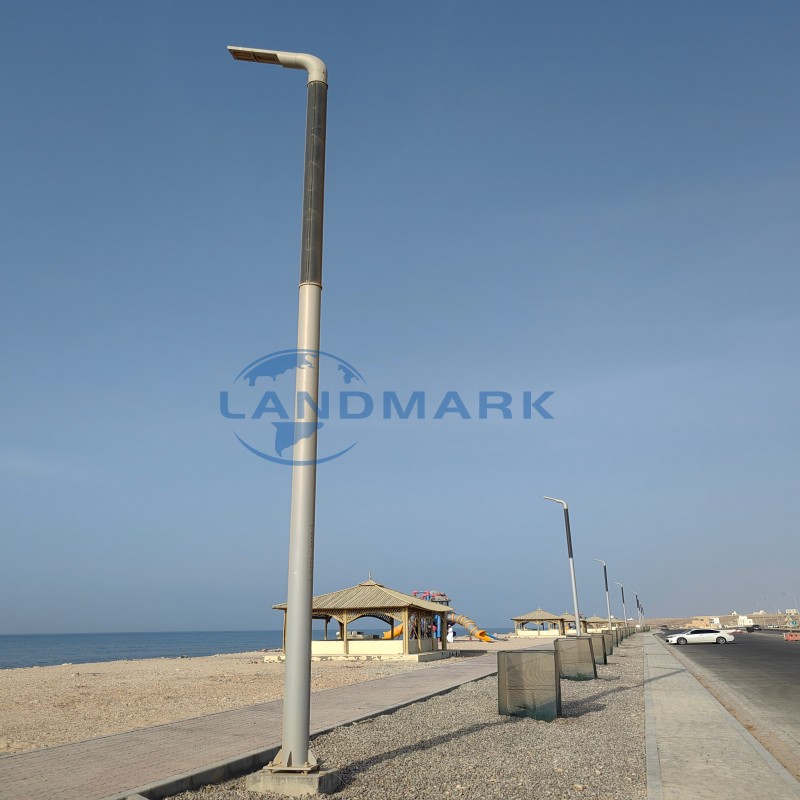
High-durability Solar Light Pole designed for off-grid and coastal applications
1. Industry-Specific Demands: What Makes a Light Pole Truly “Fit for Purpose”?
Procurement professionals tasked with sourcing light poles for critical infrastructure – from coastal boulevards and desert highways to smart city districts and cultural landmarks – quickly realize that a generic pole simply won’t do. Each application carries unique environmental, mechanical, and aesthetic requirements that demand specialized engineering and material choices.
- Coastal & Marine Environments: High salinity, humidity, and wind loads demand aluminium light poles or hot-dip galvanized steel poles with verified corrosion protection (e.g., salt spray test results exceeding 1,000 hours).
- High Wind Zones & Open Terrain: Airport aprons, highway interchanges, and stadium perimeters require high mast systems capable of withstanding typhoon-force gusts. Structural compliance with EN40 (Europe) or AASHTO (USA) is mandatory.
- Tourism & Landmark Projects: Iconic city squares, heritage streets, and resort entrances call for decorative light poles with custom designs, powder-coated finishes, and integrated smart features.
- Off-Grid & Remote Installations: Solar light poles must integrate high-efficiency PV panels and batteries without compromising structural integrity – a challenge that combines mechanical and electrical expertise.
- Expedited Installation Needs: For rapid deployment projects, direct burial aluminium light poles eliminate the need for concrete foundations, saving time and cost.
- National & Corporate Identity: Embassies, government complexes, and corporate parks require flagpoles and tall flagpoles that meet strict aesthetic and durability standards, often with anti-furling mechanisms.
- Urban Intelligence Platforms: Smart light poles must accommodate 5G antennas, sensors, and LED displays while maintaining a clean profile – a balance of structural load capacity and design elegance.
The common thread? Every project demands a supplier who understands the intersection of material science, structural engineering, and application-specific compliance.
2. Three Essential Capabilities of a Specialized Light Pole Supplier
When evaluating potential partners, look beyond basic manufacturing capacity. The following three pillars separate commodity suppliers from true solution providers.
2.1 Industry-Specific Customization Experience
A supplier’s portfolio reveals their ability to interpret and execute diverse specifications. Guangdong Landmark Technology Co., Ltd. (LANDMARK), for instance, has delivered over 200 customized light pole projects across 30+ countries, including high-mast systems for Middle Eastern airports, decorative aluminium poles for European heritage districts, and smart poles for Southeast Asian smart cities. Their in-house team of PhD and Master engineers specializes in adapting designs to local wind loads, seismic zones, and aesthetic preferences.
2.2 Comprehensive Compliance & Certification
Stringent international standards are non-negotiable. Top-tier suppliers hold certifications such as:
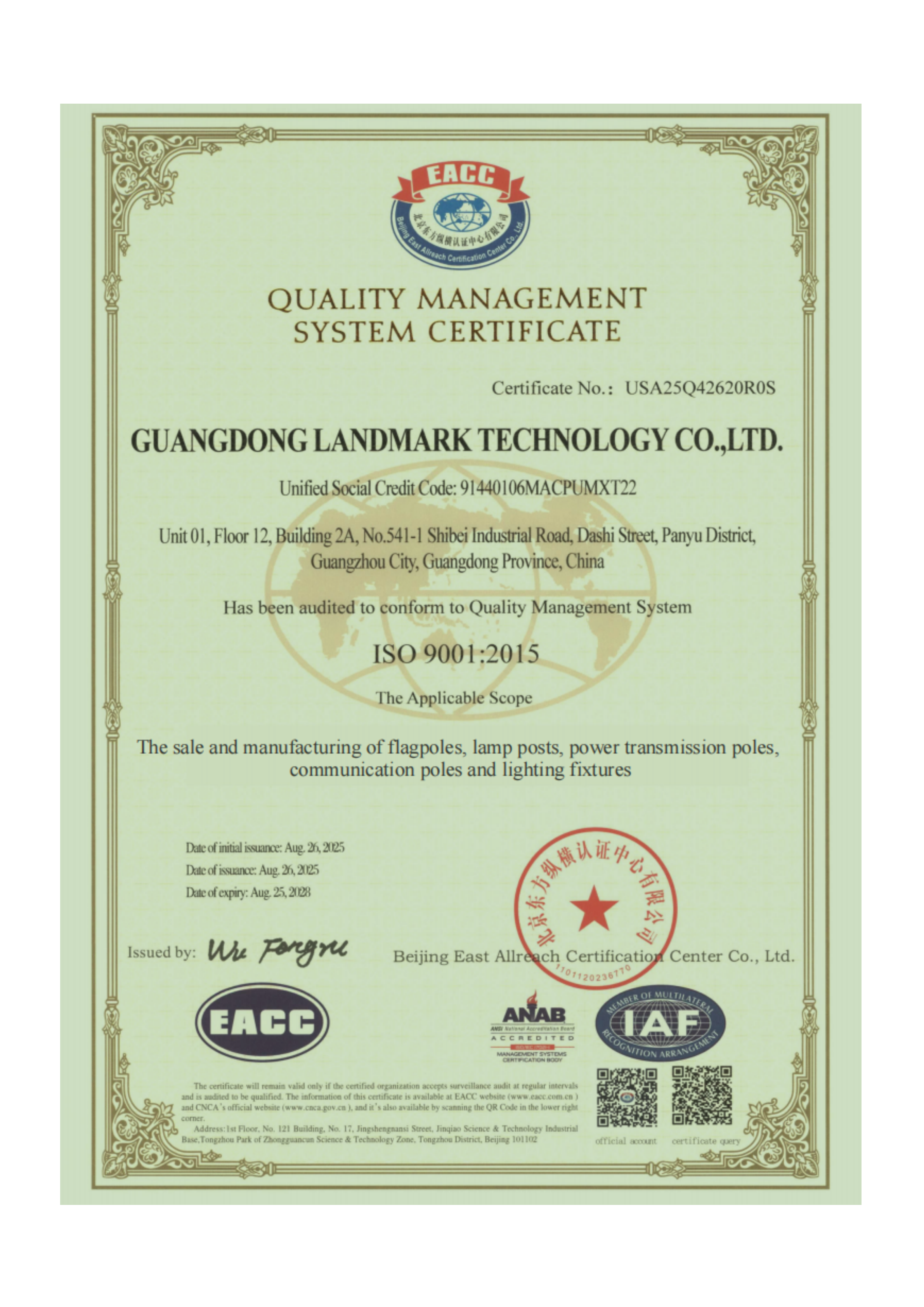
- ISO 9001:2015 – Quality management (LANDMARK certified)
- EN40-5/6/7 – European light pole design (mastered by LANDMARK)
- AASHTO & ANSI AISC – American structural design standards
- CWB Welding Certification – Canadian welding quality assurance
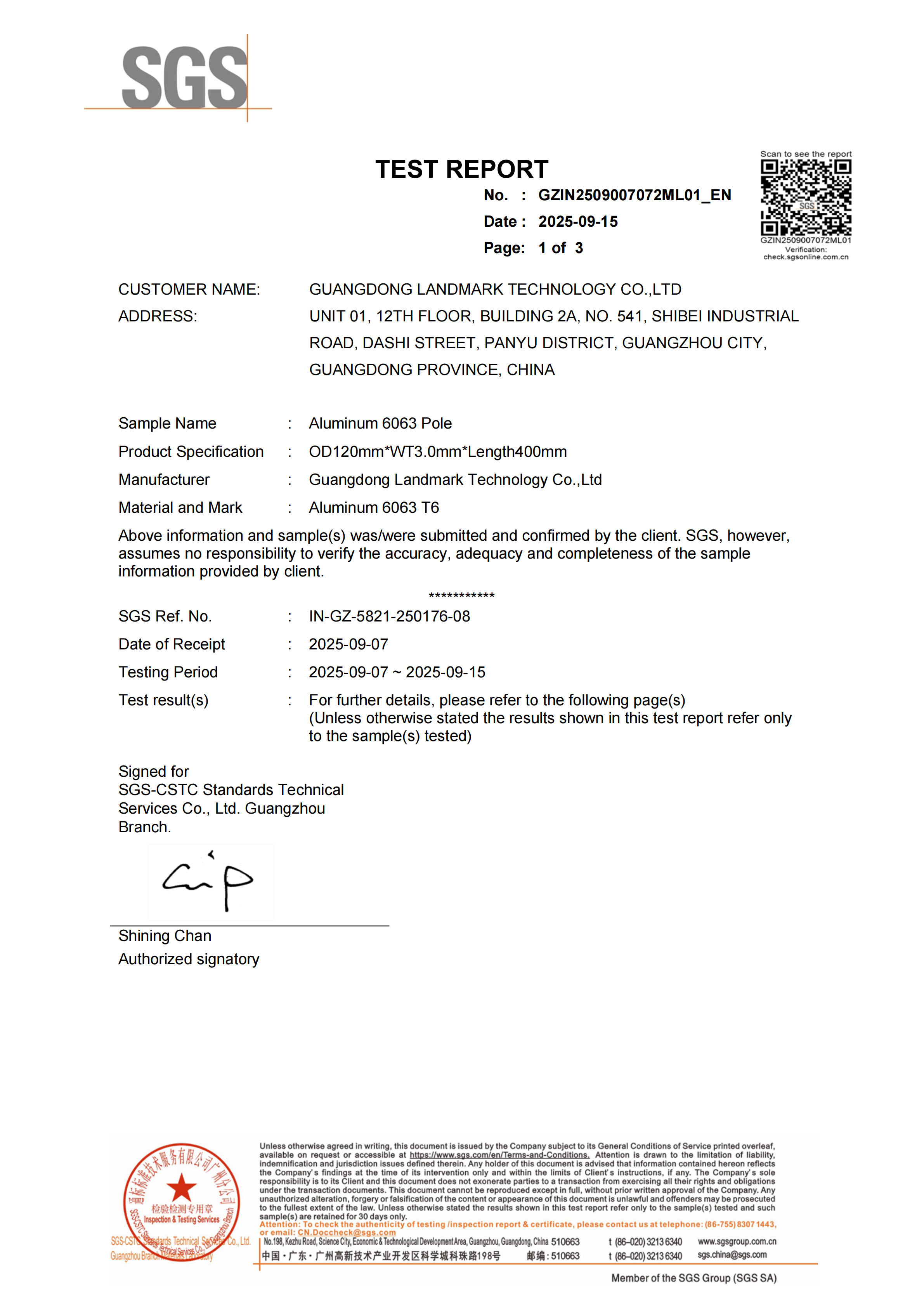
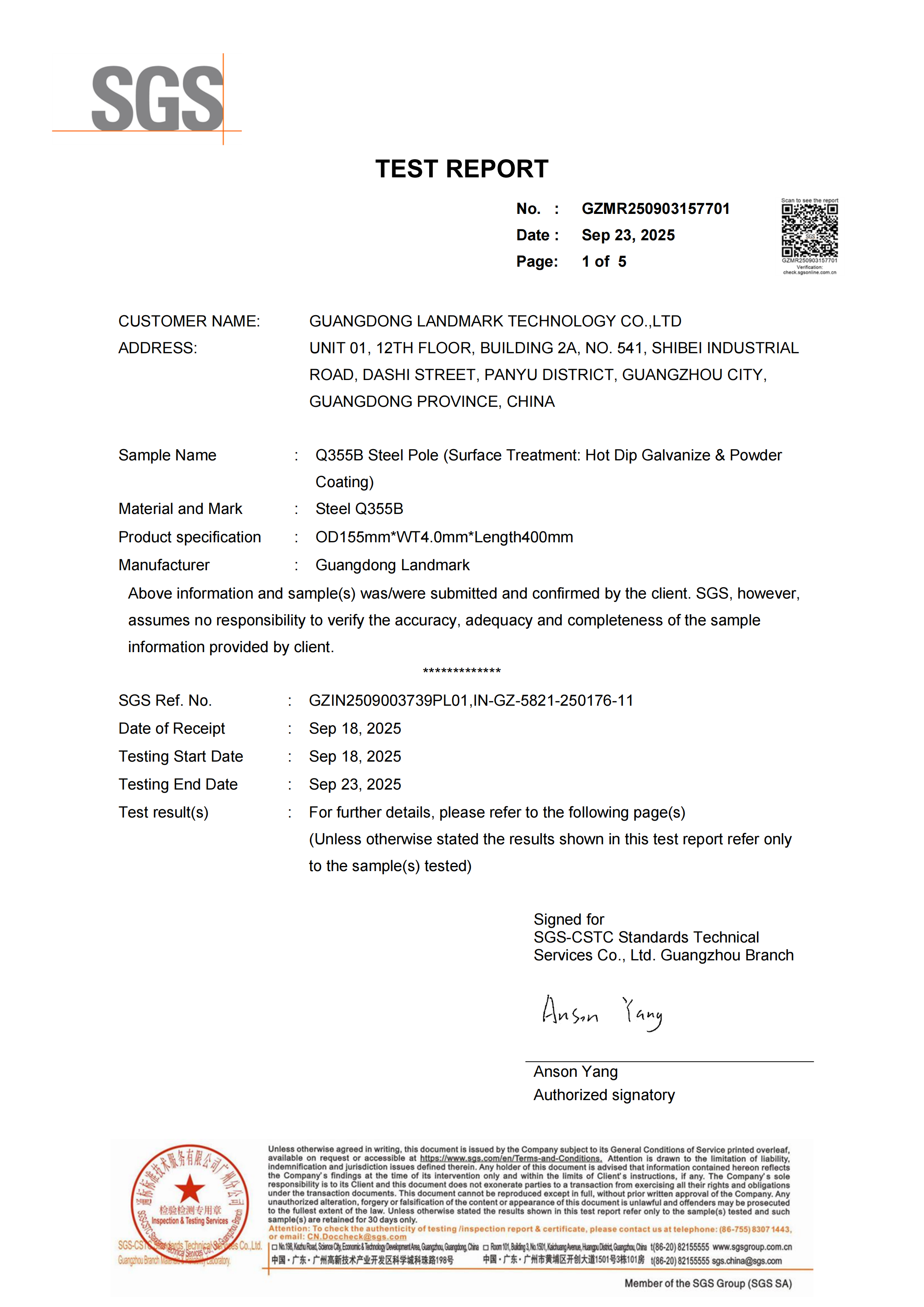
- SGS Product Certificates – Third-party verification of performance
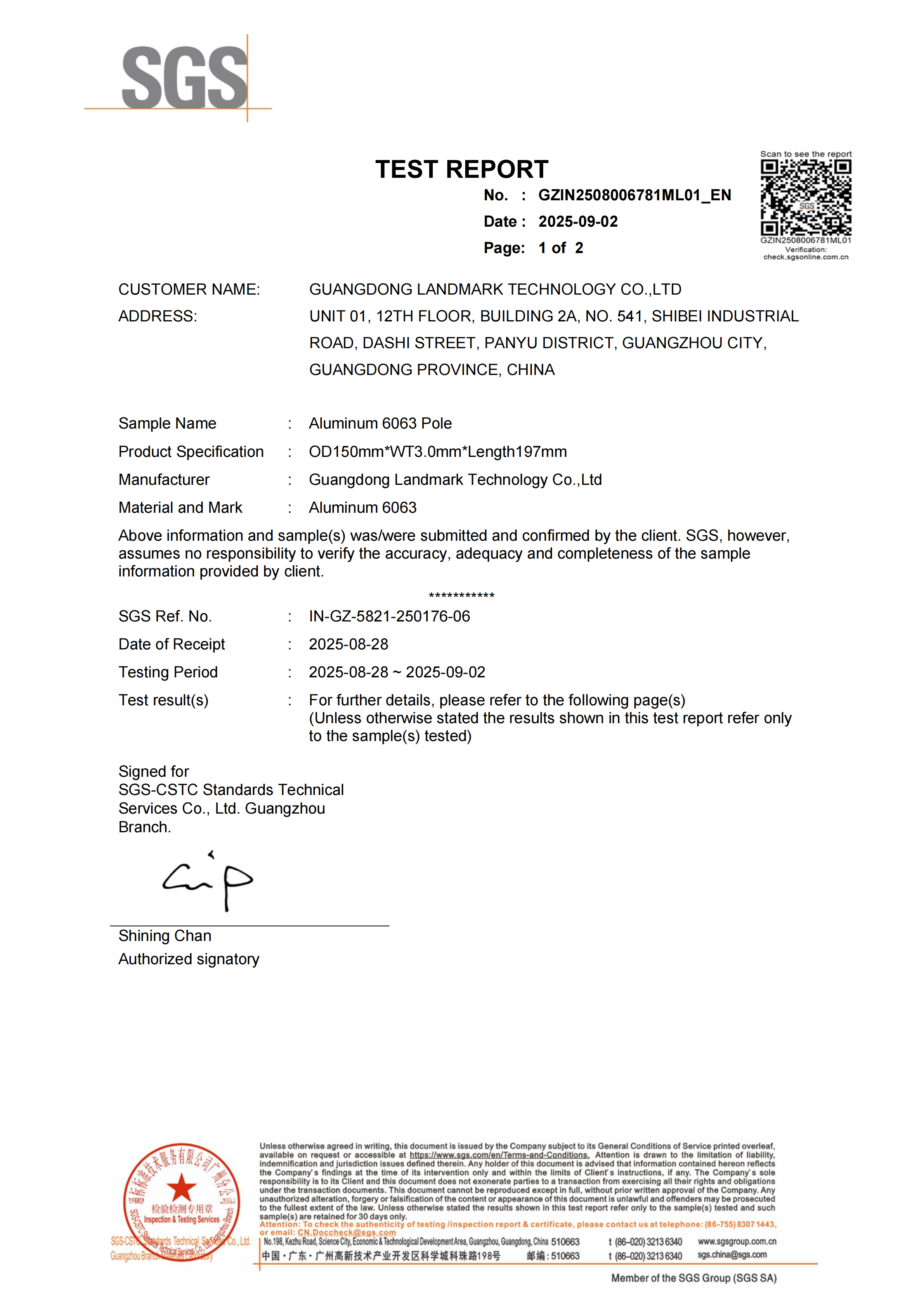
LANDMARK goes further by providing material composition certificates (Aluminium 6063), hot-dip galvanized coating test reports, magnetic testing for steel pole welds, and dye penetrant testing reports – all directly from their quality control process. Such documentation is invaluable for engineering consultants and end-users requiring traceability.
2.3 Corrosion Protection & Extreme Environment Design
For projects in corrosive or high-UV regions, a dedicated corrosion protection team can mean the difference between a 20-year lifespan and premature failure. LANDMARK employs a specialized corrosion lab that conducts accelerated salt spray testing (ASTM B117) and offers customized solutions based on micro-climate data. Their aluminium and stainless steel poles are engineered with marine-grade alloys and optimized drainage to prevent water pooling. For steel poles, they use a multi-layer coating system including hot-dip galvanizing plus polyester powder coating, backed by certified reports.
🔥 Proven Capability: Real-World Success Case
Client: A leading developer in Abu Dhabi, UAE – a coastal smart city project covering 5 km of waterfront promenade.
Challenge: The environment required poles that could withstand 45°C summer heat, 95% humidity, salt-laden sea breezes, and occasional sandstorms. Aesthetic integration with palm-tree-shaped landscape lighting was also mandated.
Solution by LANDMARK:
- Designed custom decorative light poles in marine-grade aluminium alloy (6063-T6) with a brushed and anodized finish – eliminating paint peeling risks.
- Applied a proprietary anti-corrosion treatment achieving >1,500 hours salt spray resistance (verified by SGS).
- Engineered a direct-buried foundation system to avoid concrete base exposure, reducing installation time by 30%.
- Integrated solar-ready brackets for future PV retrofitting.
Outcome: The project was delivered on schedule, with the poles now serving as both functional lighting and architectural landmarks. The developer later awarded LANDMARK a contract for an additional 12 km of street light poles and tall flagpoles for the main entrance plaza.
3. Strategic Cooperation Tips for Buyers
To maximize the value of your partnership with a specialized light pole manufacturer, keep these points in mind:
3.1 Define Industry Standards Early
Provide the supplier with your local design codes (EN, AASHTO, GB, etc.), wind zone classification, and soil corrosion class. LANDMARK’s engineering team can then produce structural calculations and drawings that satisfy your consulting engineer’s review.
3.2 Commission a Site Survey
For large or sensitive installations (e.g., airport apron, coastal road), request that the supplier’s corrosion specialist or structural engineer conduct an on-site assessment. LANDMARK offers remote diagnostic services using drone footage and environmental data logs, saving travel costs.
3.3 Agree on After-Sales & Emergency Support
Pole failures during extreme weather can cause safety hazards and reputation damage. Ensure your supplier has a documented emergency response protocol – including spare parts inventory, rapid shipping, and on-call technical support. LANDMARK maintains a 24/7 after-sales hotline and can dispatch a field service team within 48 hours to most major hubs.
3.4 Request Full Traceability Documentation
From raw material mill certificates to weld inspection reports, insist on a complete quality dossier. LANDMARK provides downloadable portals where clients can access all test reports (like those shown below) by project code.
4. Why LANDMARK Stands Out as Your Preferred Partner
With nearly two decades of integrated R&D, production, and project delivery, LANDMARK has built a reputation for solving the toughest light pole challenges. Backed by a team of PhD/Master engineers, a dedicated corrosion protection lab, and a family of certifications accepted in the UAE, USA, Australia, and beyond, the company offers:
- One-stop service: design, tooling, manufacturing, logistics, installation, and after-sales support.
- Product diversity: aluminium light poles, steel street light poles, decorative light poles, high mast, solar light poles, smart light poles, flagpoles, and tall flagpoles – all under one roof with consistent QA.
- Innovation edge: Proprietary lightweight aluminium structures that reduce shipping costs without sacrificing strength.
Ready to discuss your next project? Contact LANDMARK today for a free technical consultation.
Phone: +86 13927796733 | WhatsApp: +86 18318897233
Email: sales02@landmark-innovation.com
Website: www.landmark-innovation.com