How to Select a Chinese Light Pole Supplier: A Strategic Guide for Global Buyers Comparing China, Germany, and Japan
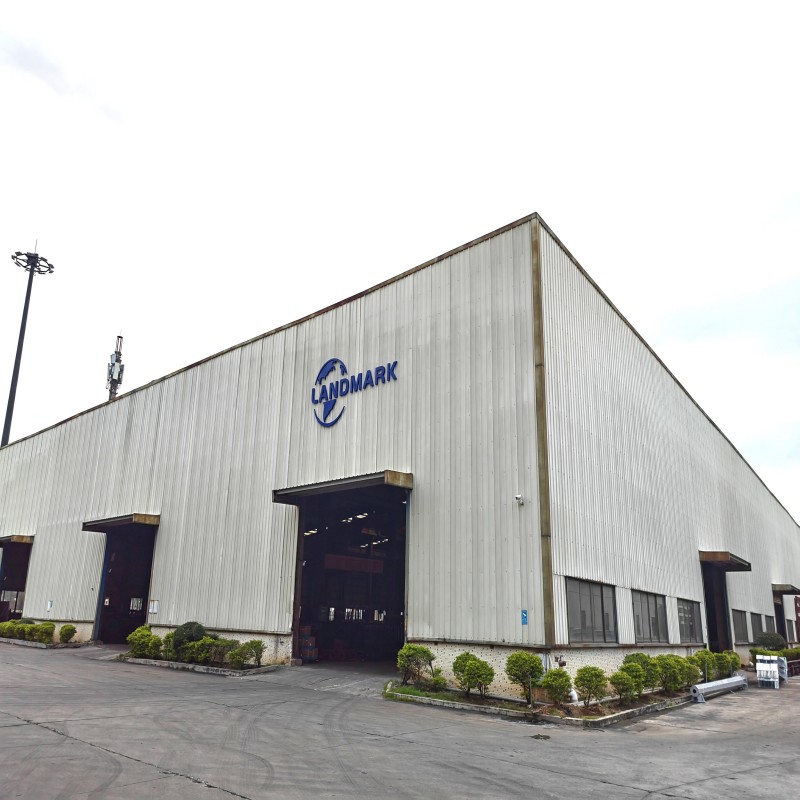
The global light pole market is projected to exceed USD 12 billion by 2030, driven by smart city projects, infrastructure upgrades, and renewable energy integration. For procurement professionals, engineering contractors, and municipal buyers, the decision to source light poles from China, Germany, or Japan involves balancing cost, quality, technical standards, lead times, and corrosion protection capabilities. This guide provides a structured framework to evaluate suppliers across these three manufacturing powerhouses, with a special focus on selecting a reliable Chinese light pole supplier that meets international engineering standards.
Understanding the Supplier Landscape: China vs. Germany vs. Japan
Key Differences at a Glance
| Factor | China (Typical Tier-1 Supplier) | Germany | Japan |
|---|---|---|---|
| Cost per unit (8m aluminium pole) | $250 – $450 | $700 – $1,200 | $600 – $1,000 |
| Lead time (50-unit order) | 25 – 45 days | 10 – 16 weeks | 8 – 12 weeks |
| Design standards familiarity | EN40, AASHTO, ANSI available | EN40 native | JIS native, can adopt EN40 |
| Corrosion protection | Hot-dip galvanizing, powder coating, aluminium alloy inherent | Dual corrosion systems (galvanizing + wet paint) | Advanced surface treatment (fluoropolymer) |
| Customization flexibility | Very high – custom shapes, colors, integrated IoT | Moderate – standard catalog with limited modifications | Moderate – high precision but longer time |
| Certification (typical) | ISO, SGS, CWB, salt spray test reports | CE, GS, TÜV | JIS, RoHS, PSE |
Why Choose a Chinese Light Pole Supplier?
China has become the world's largest producer of light poles, exporting to over 180 countries. The advantages extend beyond price to include:
- Economies of scale: Major industrial clusters in Guangdong, Jiangsu, and Hebei enable competitive pricing without sacrificing volume.
- Certification alignment: Leading Chinese manufacturers hold SGS product certificates, CWB welding certifications, ISO management systems, and test reports that satisfy European and American authorities.
- One-stop solutions: Many Chinese suppliers offer integrated services – from structural design (EN40/AASHTO) to logistics and on-site installation support.
- Material diversity: Expertise in aluminium light poles, steel light poles, stainless steel light poles, solar light poles, and smart light poles under one roof.
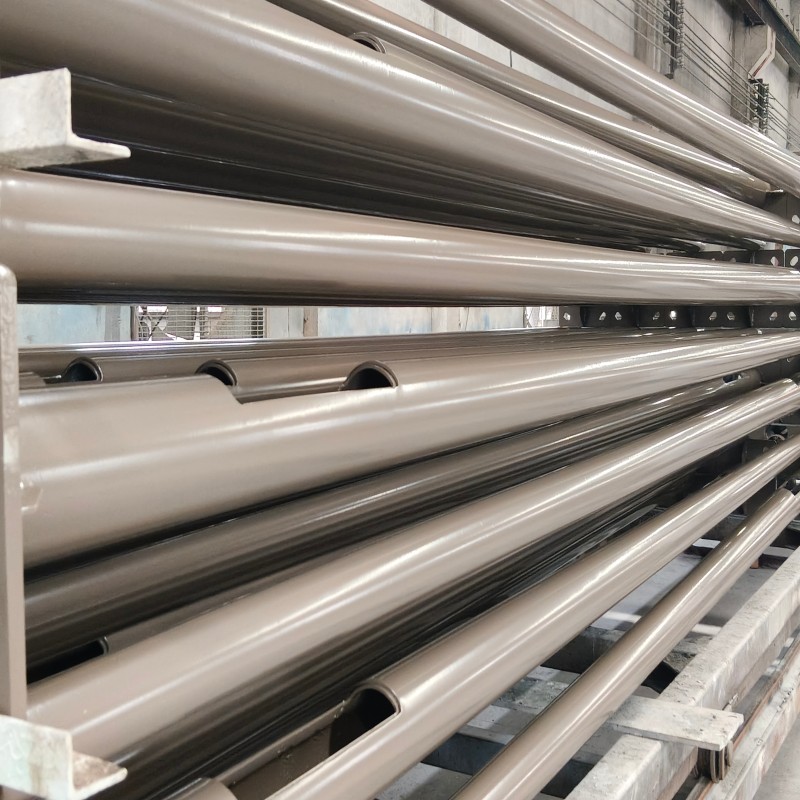
How to Evaluate a Chinese Light Pole Supplier: Step-by-Step Framework
Step 1: Verify Design & Engineering Capability
A reliable Chinese supplier must demonstrate mastery of international standards. Ask for evidence of structural calculations under EN40-5/6/7 (European) or AASHTO/ANSI (American) loading conditions. For example, Guangdong Landmark Technology Co., Ltd. employs a team of Ph.D. and Master engineers who specialize in pole structural verification and can provide certified design reports.
Step 2: Assess Corrosion Protection Expertise
For coastal, oil & gas, mining, or chemical environments, corrosion resistance is critical. Inquire about:
- Hot-dip galvanizing thickness (ISO 1461, typical >85 μm)
- Salt spray test results (e.g., 1000+ hours for powder coating)
- Material selection advice: aluminium 6063 offers natural corrosion resistance, while stainless steel (304/316) is preferred for severe marine conditions.
LANDMARK provides dedicated corrosion protection solutions backed by Salt Spray Test reports (GZIN2509003739PL01_EN) and Material Composition Certificates for aluminium 6063.
Step 3: Check Certifications and Test Reports
Legitimate Chinese manufacturers produce independent third-party certifications. Required documents include:
- ISO 9001 Quality Management System
- SGS product certificate (for specific pole models)
- CWB welding certification (if welding structural components)
- Magnetic particle testing and dye penetrant testing reports for weld quality
- Hot-dip galvanized coating thickness test report
- Material composition certificates (e.g., aluminium 6063, steel grade)
Step 4: Evaluate Product Scope and Customization
The supplier should offer the full spectrum of pole types relevant to your project. Look for:
- Aluminium light poles – lightweight, corrosion-resistant, direct burial or base-plate
- Steel light poles – high strength, cost-effective for large-scale municipal lighting
- High mast poles – for airports, ports, stadiums (15–50m height)
- Solar light poles – integrated bracket designs for off-grid solutions
- Smart light poles – with 5G, IoT, and sensor integration
- Flagpoles and tall flagpoles – monumental and commercial applications
- Decorative light poles – customized shaping for cultural tourism and landmark projects
- Direct burial aluminium light poles – no base plate, faster installation
LANDMARK’s catalog covers all these categories, with a dedicated exterior design team for personalized aesthetic solutions.
Step 5: Confirm Quality Control & Testing
Visit or request video evidence of the factory’s QC processes. Key checkpoints include:
- Raw material inspection (chemical composition, mechanical properties)
- Welding procedure qualification (WPS/PQR)
- In-process dimensional checks (taper, straightness, flange parallelism)
- Galvanizing bath sampling (zinc purity, thickness)
- Final load testing (static load, wind load simulation)
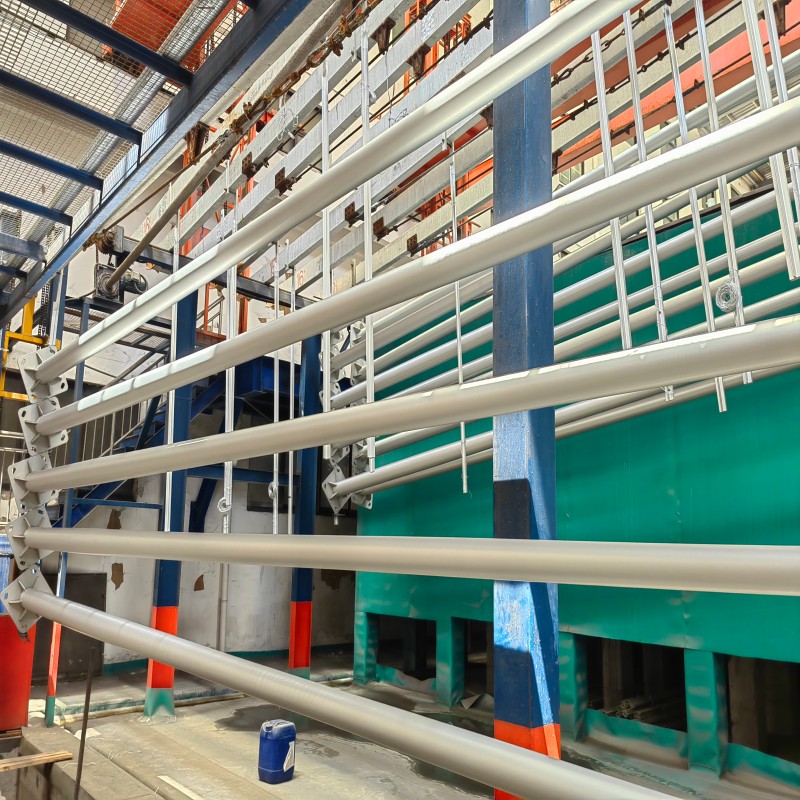
Step 6: Assess After-Sales and Logistics Support
Chinese suppliers typically offer FOB, CIF, or DDP terms. Ensure they provide:
- Packaging that protects against transit damage (plywood crates, steel frames)
- Installation manuals and site supervision (remote or on-site)
- Spare parts availability and warranty period (usually 2–5 years on galvanizing, 10+ years on aluminium structures)
- Responsive English-speaking project managers
Use Cases: When China (LANDMARK) Outperforms
- Middle East municipal lighting: A Dubai contractor needed 2,000 decorative aluminium poles with EN40 compliance and fast delivery. LANDMARK completed the order in 35 days with SGS certificates accepted by Dubai municipality.
- US smart city pilot: An American integrator required 200 smart light poles with pre-installed sensor brackets. LANDMARK provided custom engineering drawings (AASHTO) and shipped within 6 weeks at 40% lower cost than German alternatives.
- Australian coastal project: A mining camp in Western Australia needed corrosion-resistant direct burial aluminium poles. LANDMARK supplied 6063 alloy poles with 1500-hour salt spray certification, passing Australian AS/NZS 1158 standards.
Frequently Asked Questions
Is it safe to buy light poles from Chinese suppliers?
Yes, when you partner with certified manufacturers like LANDMARK that hold ISO, SGS, CWB, and provide verifiable test reports. Always request samples and third-party inspections before bulk production.
How do Chinese light poles compare to German light poles in quality?
German poles often have longer surface warranties (e.g., 15 years on painting systems). However, premium Chinese manufacturers now offer comparable dual-coat systems (hot-dip galvanizing + polyester powder coating) with 10-year guarantees. For structural strength, EN40-compliant Chinese poles are equivalent.
What is the typical lead time for a Chinese light pole order?
Standard lead times: 25–45 days for production, plus 15–25 days sea freight to major global ports. Express air freight is available for sample or urgent orders.
Can Chinese suppliers match Japanese precision for smart pole integration?
Many Chinese suppliers (including LANDMARK) use CNC machining and robotic welding to achieve ±1mm tolerances, meeting the precision required for 5G antenna mounts and sensor integration. Japanese suppliers excel in miniaturization, but Chinese manufacturers offer greater flexibility in size and configuration.
How do I verify a Chinese supplier's corrosion resistance claims?
Request the salt spray test report (ASTM B117 or ISO 9227) from an accredited lab. LANDMARK provides reports covering 500h, 1000h, and 1500h durations for different coating systems.
Ready to Source Premium Light Poles from China?
Contact LANDMARK’s engineering team for a free consultation. We provide structural design, corrosion protection proposals, and full certification packages.
📞 Phone/WhatsApp: +86 13927796733 / +86 18318897233
✉️ Email: sales02@landmark-innovation.com
🌐 Website: www.landmark-innovation.com
📍 Address: 1201, 2A, Smart Creative Park, Shibei Industrial Road, Dashi Street, Panyu District, Guangzhou, China
Conclusion
Selecting the right light pole supplier requires a clear understanding of your project’s technical demands, budget, and timeline. Chinese suppliers, represented by industry leaders like LANDMARK, offer an unbeatable combination of cost efficiency, engineering depth, and certification credibility when carefully vetted. By following the six-step framework outlined above – verifying design expertise, corrosion protection, certifications, product scope, quality control, and logistics – global buyers can confidently source world-class light poles from China while meeting European, American, or local standards.
For a detailed quote or to discuss your next infrastructure project, reach out to LANDMARK today.