Navigating the World of Light Poles: A Strategic Guide for Project Success
Selecting the appropriate light pole is a critical decision that impacts the safety, aesthetics, longevity, and overall budget of any lighting project. Whether for a municipal road, a commercial complex, a public park, or a national landmark, the choice involves more than just picking a post to hold a fixture. With the global push towards sustainable and smart infrastructure, understanding the nuances of aluminium light pole, steel light pole, and smart light pole technologies is more important than ever. This guide, drawing from the expertise of industry leaders like LANDMARK (Guangdong Landmark Technology Co., Ltd.), will walk you through the key considerations to ensure you make an informed, future-proof decision.
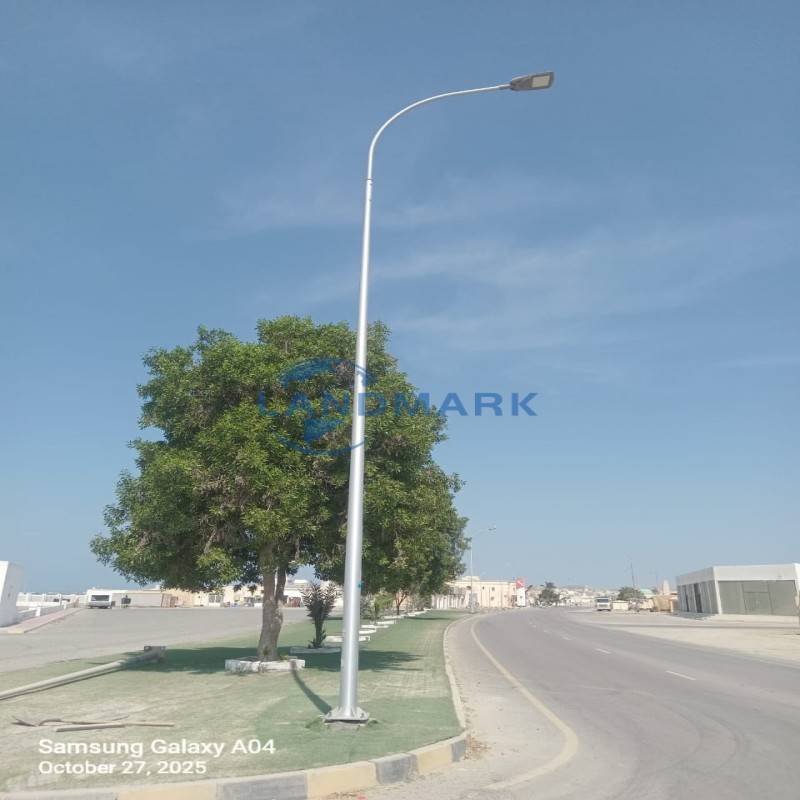
Modern aluminium light poles offer a blend of durability, lightweight design, and corrosion resistance, ideal for various applications.
Step 1: Define Your Project's Core Requirements
Before diving into materials and styles, clearly outline your project's needs. Ask these fundamental questions:
- Application & Environment: Is this for a coastal highway (high corrosion), an urban street light pole installation, a sports stadium high mast, or a decorative plaza? Environmental factors like wind load (requiring structural verification to standards like AASHTO), salt spray, pollution, and seismic activity are paramount.
- Height & Mounting Requirements: Determine the necessary mounting height for optimal illumination. This will influence the pole's class and design. Consider if a direct burial aluminium light pole for simpler installation or a base-plated model is required.
- Load & Fixture Details: Calculate the total weight and wind area of the luminaire(s), banners, cameras, or other attachments. This is crucial for structural integrity.
- Aesthetic & Architectural Harmony: For decorative light pole projects in cultural or tourism areas, the design must complement the surroundings. Companies like LANDMARK offer customized exterior design services for this very purpose.
- Budget & Lifecycle Cost: Consider not just the initial purchase price but the total cost of ownership, including installation, maintenance, and expected lifespan.
Step 2: Choose the Optimal Material
The material is the foundation of your pole's performance. Here’s a breakdown of the most common types:
Aluminium Light Poles
Advantages: Naturally corrosion-resistant, lightweight (reducing shipping and installation costs), requires no painting (maintains appearance), and is 100% recyclable. Ideal for coastal areas, parks, and standard street light pole applications. High-quality alloys like 6063 ensure strength.
Considerations: Generally higher material cost than basic steel. The strength-to-weight ratio is excellent, but for extremely high loads or heights, specific engineering is required.
LANDMARK's Edge: Their expertise in aluminium light pole manufacturing is backed by material composition certificates (e.g., Aluminium 6063) and adherence to strict international standards.
Steel Light Poles (Hot-Dip Galvanized)
Advantages: High strength and durability, often more cost-effective for heavy-duty applications. When properly hot-dip galvanized and powder-coated, they offer excellent protection. Common for high mast lighting (30m+), heavy-duty roadway lighting, and communication poles.
Considerations: Heavier than aluminium, requiring more robust foundations and handling. The galvanizing and coating process is critical to prevent rust.
LANDMARK's Edge: Their corrosion protection team provides solutions for harsh environments. They hold specific test reports like Hot Dip Galvanized Coating Test Report and Salt Spray Test reports, proving long-term durability.
Stainless Steel & Composite Poles
Stainless Steel: Offers superior corrosion resistance and a distinctive modern appearance, often used in high-end architectural projects or highly corrosive industrial settings. It can be more expensive.
Smart Light Poles: These are typically constructed from aluminium or steel but are designed as multi-functional platforms to host LED lights, CCTV, environmental sensors, EV chargers, and 5G small cells. The structural design must account for additional weight and cabling.
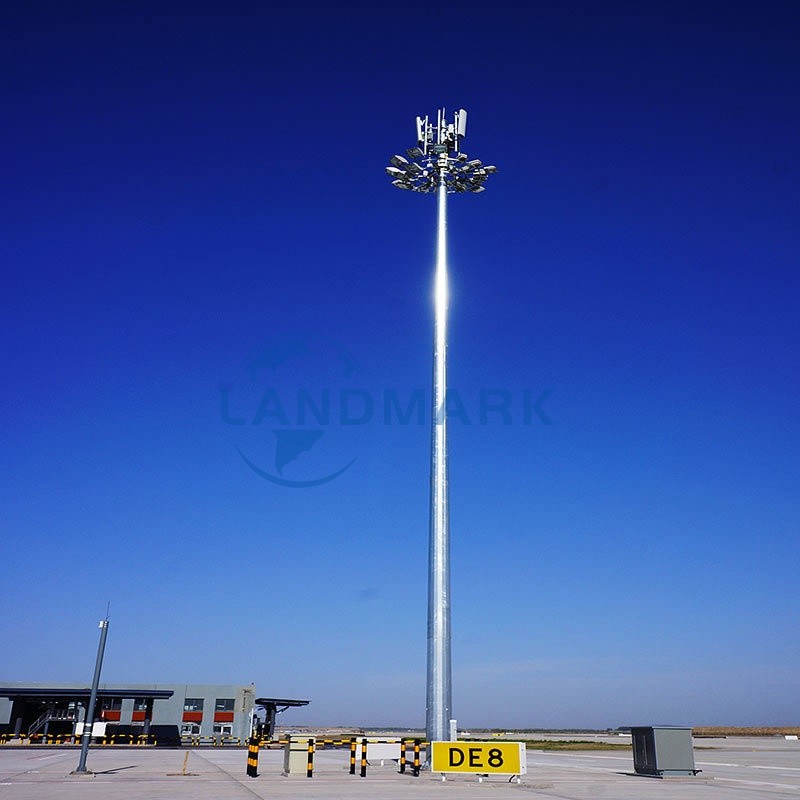
A high mast system provides wide-area illumination for stadiums, ports, and large intersections, requiring rigorous engineering.
Step 3: Understand Key Technical Standards and Certifications
Compliance with international standards is non-negotiable for safety and performance. Reputable manufacturers design and test their products accordingly. Key standards include:
- AASHTO (American Association of State Highway and Transportation Officials): The benchmark for structural design of roadside supports in the US and many other countries.
- EN 40-5/6/7 (European Standards): Govern the design and verification of lighting columns in Europe.
- ANSI/AISC (American Institute of Steel Construction): For steel structure design.
Always request certification documents. For example, LANDMARK provides a comprehensive suite of proof, including:
- ISO Certification: Demonstrates a certified quality management system.
- Welding Certificates (CWB): Critical for the integrity of steel light poles and aluminium light poles.
- Material & Test Reports: Such as Strength/Hardness tests, Dye Penetrant welding tests, and Salt Spray tests. These are tangible evidence of quality.
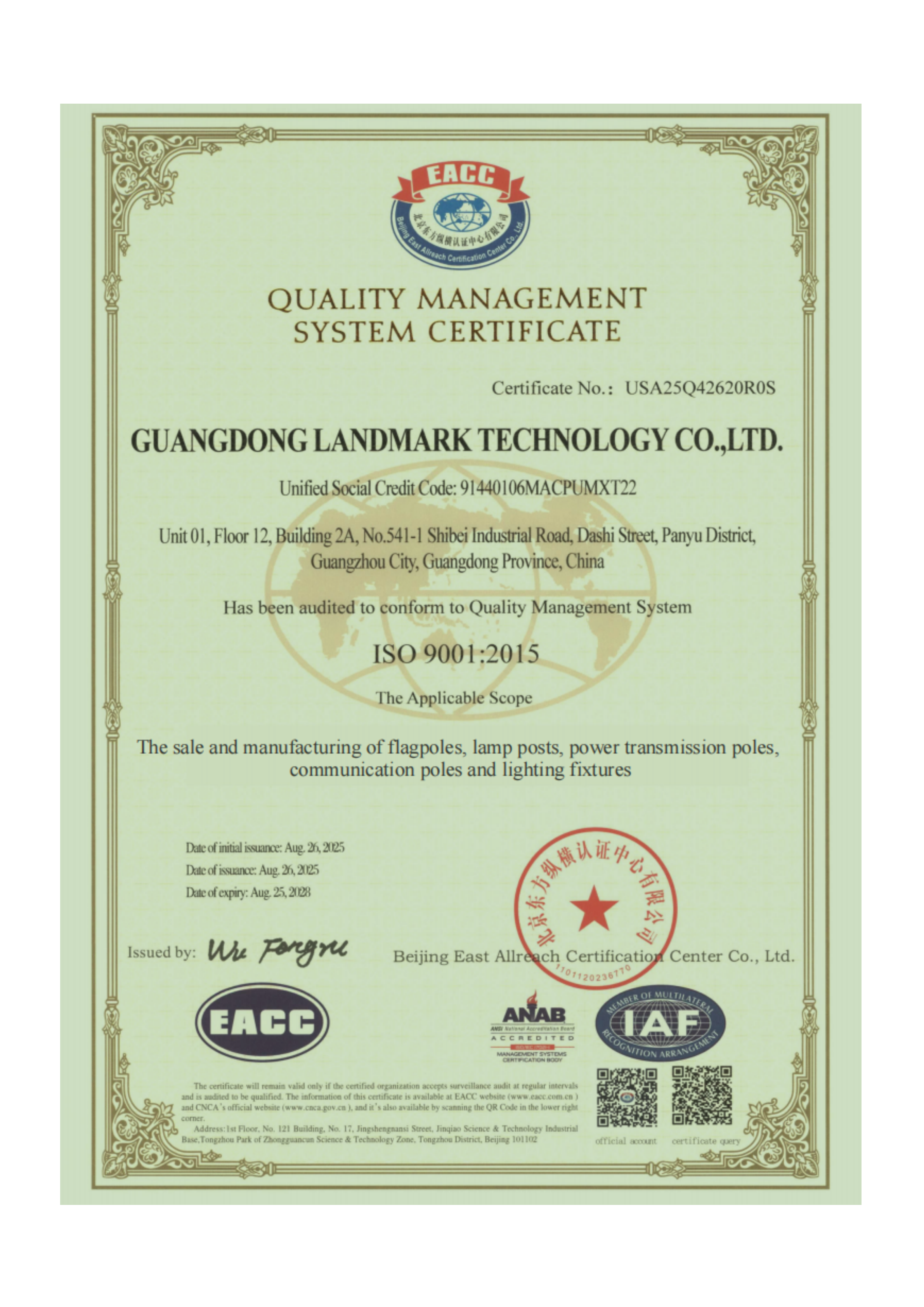
International certifications like ISO are fundamental for trusting a manufacturer's processes.
Step 4: Explore Specialized Pole Types for Specific Needs
Beyond standard street poles, specialized solutions exist:
- Solar Light Pole: An integrated system with photovoltaic panels, battery, controller, and LED light. Perfect for off-grid areas, parks, and pathways, reducing trenching and electricity costs. Ensure the system is sized correctly for the geographic location.
- Direct Burial Aluminium Light Pole: Designed to be installed directly into the ground, eliminating the need for a concrete foundation. This speeds up installation and reduces cost, ideal for simpler pathway or garden lighting projects.
- Flagpole & Tall Flagpole: Engineered for specific heights and wind loads to proudly display flags. Considerations include internal halyard systems, finishes, and truck assemblies.
- Decorative Light Pole: Combines illumination with artistic design to enhance public spaces, historic districts, and commercial developments.
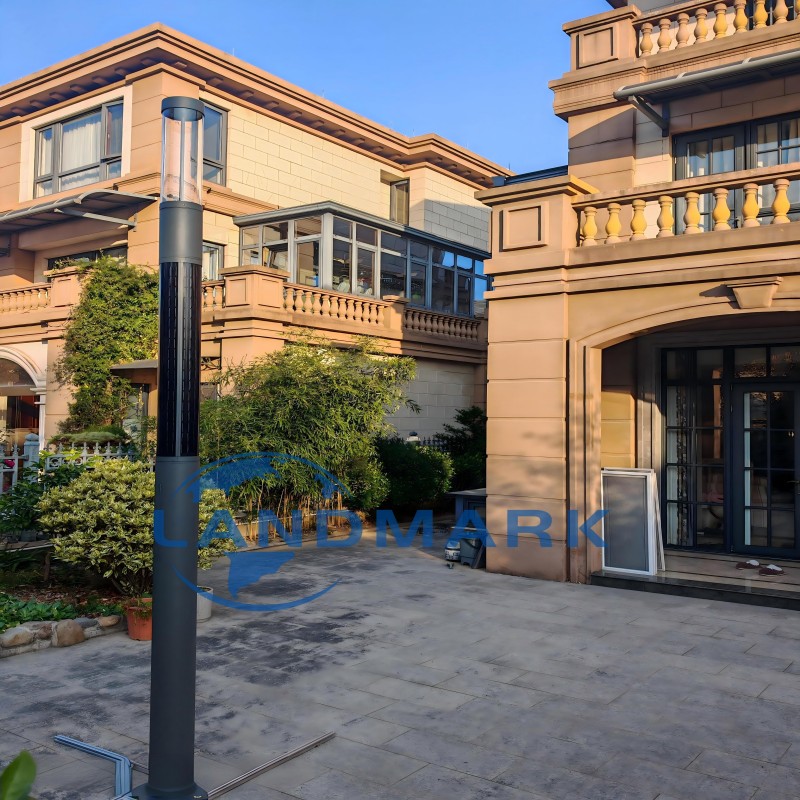
A solar light pole provides sustainable, off-grid lighting, contributing to low-carbon infrastructure goals.
Step 5: Partner with a Qualified Manufacturer
The final and most crucial step is selecting your supplier. Look for a manufacturer with:
- Proven Engineering Capability: A team capable of structural design and verification per international codes. LANDMARK, for instance, employs Ph.D. and Master engineers dedicated to this.
- Vertical Integration & Quality Control: Control over the entire process from R&D to production ensures consistency. Strict adherence to processes is key.
- Customization & Design Service: The ability to tailor products to your specific project, whether it's a unique decorative light pole or a smart light pole with specific module integrations.
- Global Project Experience & Certifications: A track record of supplying to large-scale international projects and holding necessary market access approvals (e.g., for Dubai, USA, Australia).
- Comprehensive Service: Offering support from design and logistics to installation guidance and after-sales service.
For a reliable partner that embodies these qualities, consider contacting Guangdong Landmark Technology Co., Ltd. (LANDMARK). With their closed-loop system, focus on corrosion protection and lightweight high-strength solutions, and a portfolio serving global sporting events and municipal projects, they are equipped to support your light pole needs.
Contact LANDMARK for a Consultation:
Phone: +86 13927796733
WhatsApp: +86 18318897233
Email: sales02@landmark-innovation.com
Website: www.landmark-innovation.com
Address: 1201, 2A, Smart Creative Park, Shibei industrial road, Dashi street, Panyu district, Guangzhou city, Guangdong Province, China
By following this structured approach—defining needs, choosing materials wisely, verifying standards, understanding specialized options, and selecting a qualified partner—you can confidently specify the right light pole for your project. This ensures a safe, durable, aesthetically pleasing, and cost-effective lighting solution that will stand the test of time and elements.